As energy costs rise and sustainability becomes a business imperative, more companies are turning to solar energy. However, choosing the right solar power system can be complex, especially for commercial and industrial operations with varying energy demands. This article provides an in-depth overview of the three primary types of solar power systems used by businesses today: On-Grid, Off-Grid, and Hybrid systems.
On-Grid Solar Systems (Grid-Tied)
An on-grid or grid-tied solar system is directly connected to the public electricity grid. These systems do not include battery storage. Instead, they use the utility grid as a backup source and a destination for surplus energy. When solar generation exceeds demand, the excess electricity is exported back to the grid, often earning credits or payments through a mechanism called net metering.
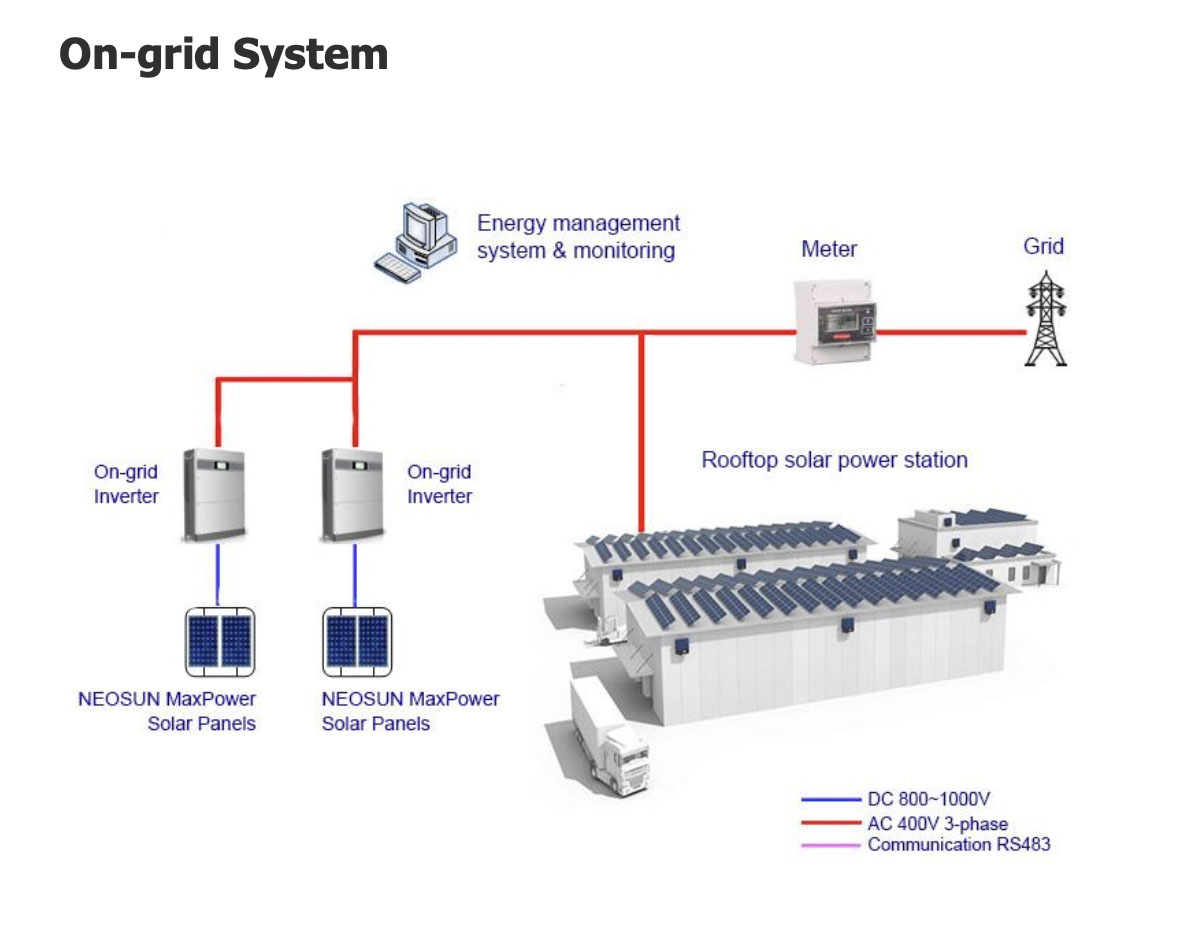
Advantages:
- Lower upfront cost compared to off-grid or hybrid systems, as no batteries are required.
- Ability to offset energy bills by selling surplus electricity.
- Easy integration with existing electrical infrastructure.
- Eligible for most government incentives and rebate programs.
Limitations:
- Cannot function during grid outages for safety reasons (unless paired with battery backup).
- Dependence on grid availability limits energy independence.
On-grid systems are highly efficient for companies operating in areas with stable grid infrastructure. They are particularly suitable for urban and industrial zones where power outages are rare, and where businesses can capitalize on net metering benefits to reduce operational costs.
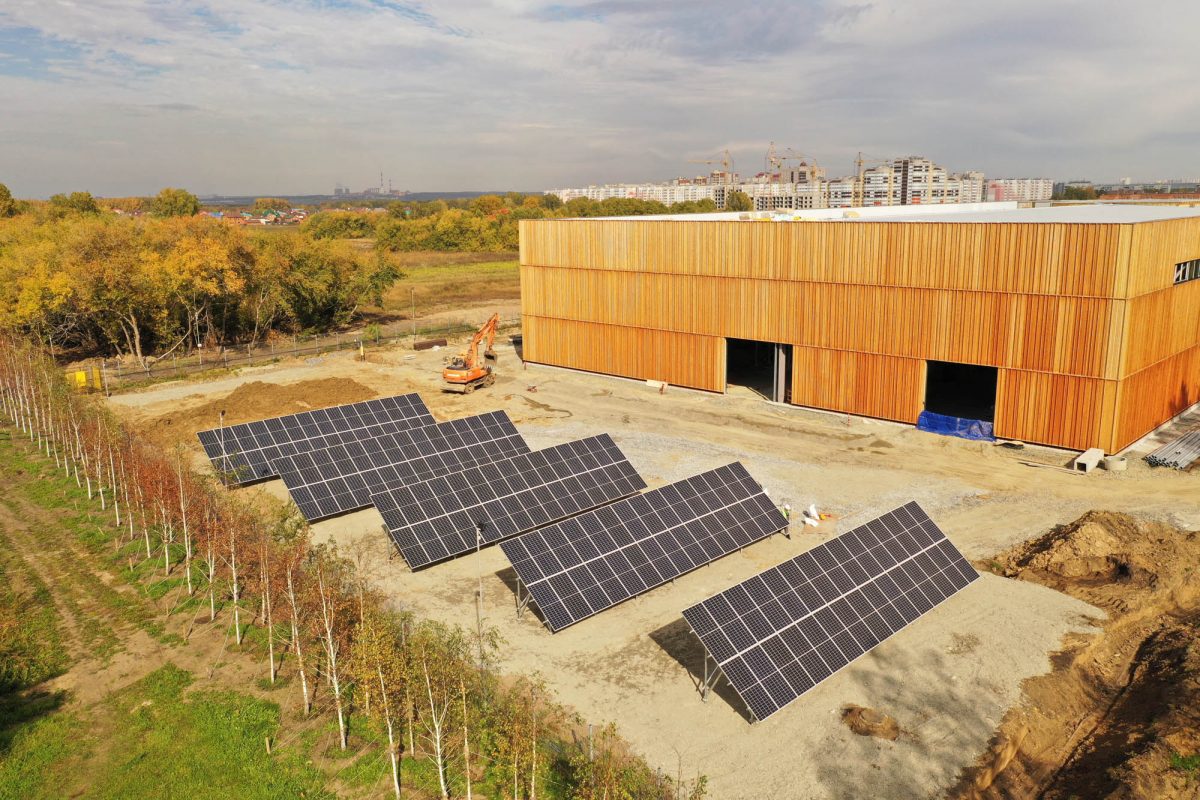
Example of one of NEOSUN’s on-grid solar systems.
2. Off-Grid Solar Systems (Standalone Systems)
Off-grid solar systems are completely disconnected from the public power grid. They rely on solar panels to generate electricity and on battery storage systems to store excess energy for use during nighttime or cloudy periods. These systems are often paired with backup generators to ensure energy availability during prolonged low-sunlight conditions.
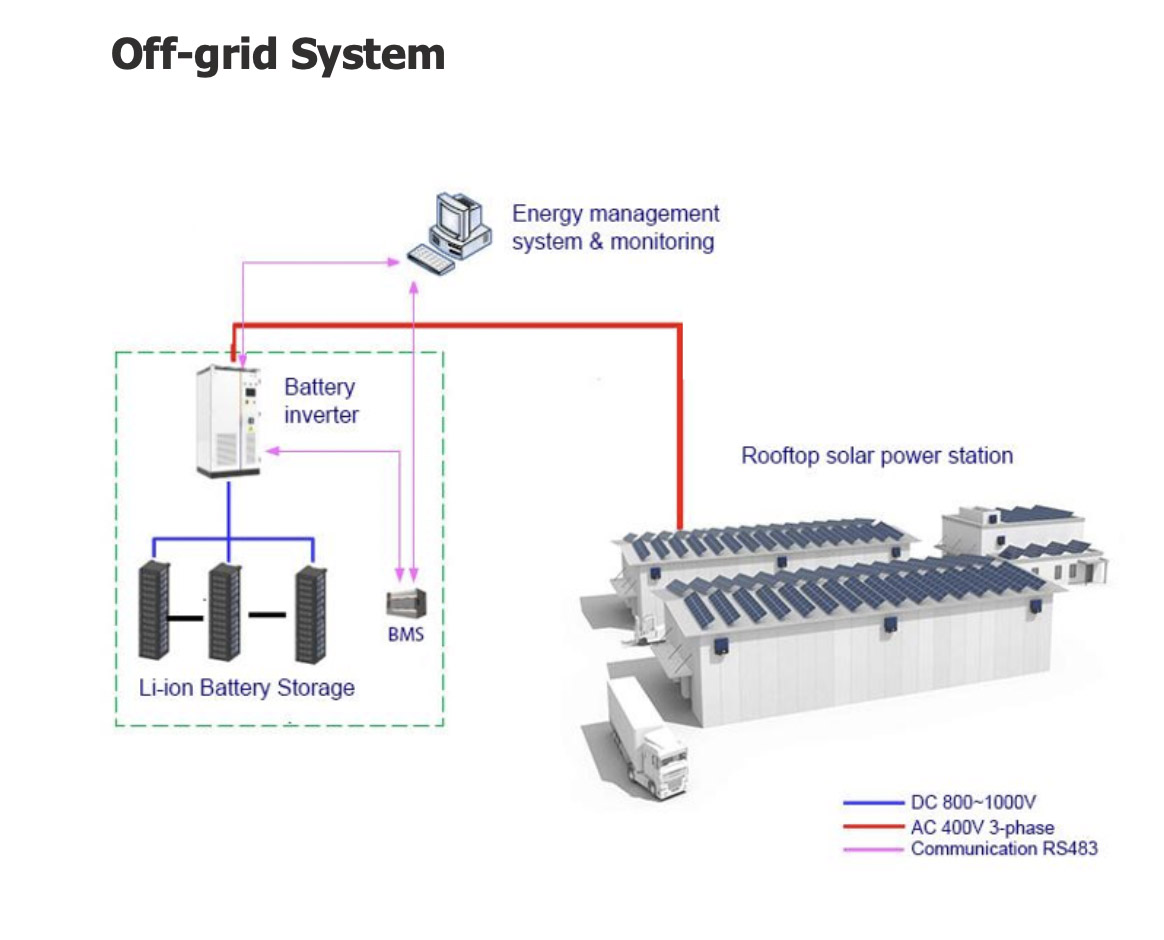
Advantages:
- Full energy independence from the grid.
- Reliable solution for remote areas without access to grid infrastructure.
- Protection from grid failures, voltage fluctuations, and rising utility costs.
Limitations:
- Higher upfront costs due to the need for extensive battery storage.
- Energy availability depends on accurate system sizing and weather conditions.
- Requires more sophisticated energy management and regular monitoring.
Off-grid systems are typically used in rural or remote areas where grid access is limited, unstable, or unavailable. They are also an appropriate choice for businesses requiring full autonomy, such as agricultural facilities, remote manufacturing sites, or critical infrastructure with zero-tolerance for outages. Due to higher costs and complexity, precise load analysis and expert design are essential.
Hybrid Solar Systems (Grid + Battery Backup)
Hybrid solar systems combine the features of both on-grid and off-grid systems. They are connected to the grid but also include battery storage. During the day, solar panels charge the batteries and supply the facility with power. If excess energy remains, it can be sent back to the grid. When solar production drops (at night or during low-light conditions), the system draws energy from the batteries. If the battery charge is depleted, the grid provides backup power.
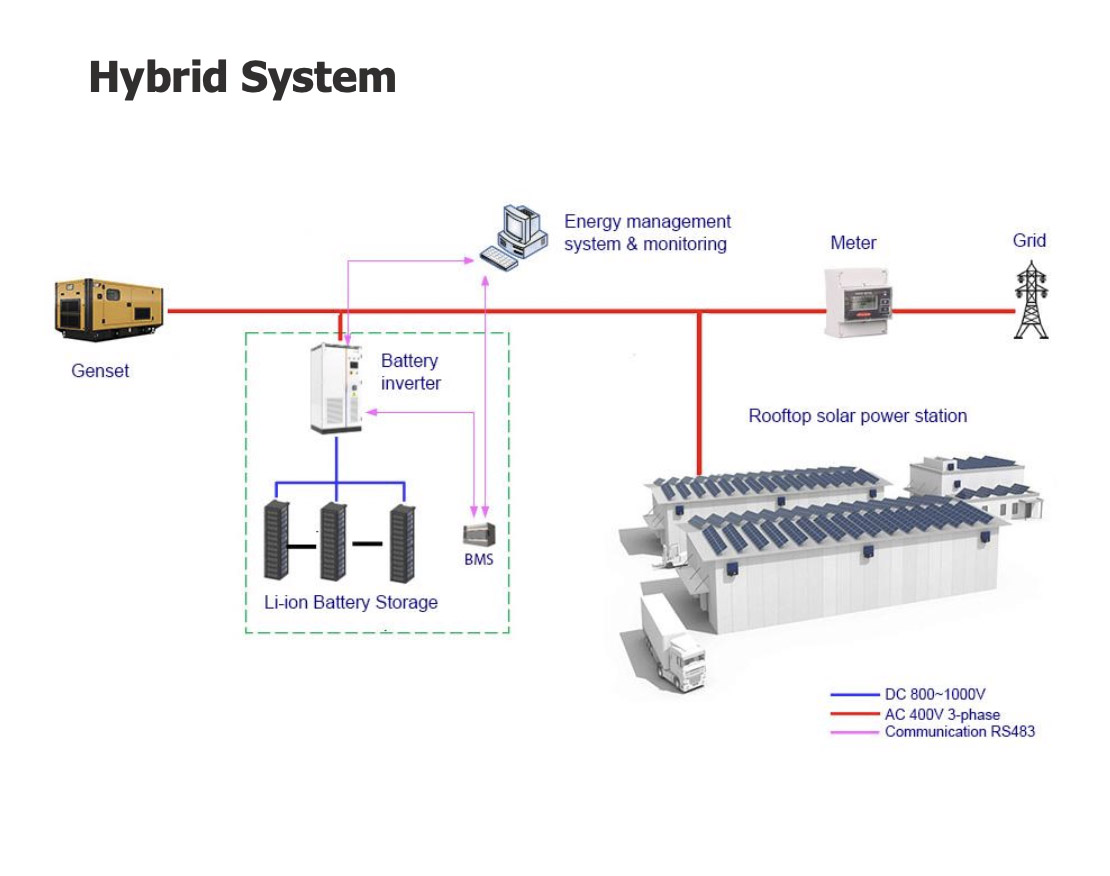
Advantages:
- Combines the reliability of grid connection with the independence of storage.
- Provides backup during blackouts or peak demand periods.
- Enables energy time-shifting — storing energy when it’s cheap or abundant, and using it when grid rates are higher.
- More efficient energy management and lower long-term energy costs.
Limitations:
- Higher initial investment than on-grid systems due to batteries and control equipment.
- Requires intelligent energy management systems (inverters, charge controllers).
- Some regions have limited net metering for hybrid setups.
Hybrid systems are ideal for businesses that want to reduce dependency on the grid but are not ready to go fully off-grid. They are especially valuable in areas with unstable grid supply, frequent outages, or high peak demand charges. With proper design, a hybrid system can offer excellent ROI while enhancing energy resilience and sustainability.
Choosing the Right System for Your Business
When selecting a solar power system for a commercial facility, several key factors should be assessed:
- Location and grid reliability: Urban areas with strong grid infrastructure may benefit most from on-grid or hybrid solutions, while rural businesses may require off-grid capabilities.
- Energy demand patterns: Businesses with high daytime consumption may align perfectly with solar production, improving efficiency.
- Budget and ROI expectations: On-grid systems are more affordable initially, while hybrid and off-grid systems offer greater long-term energy independence.
- Business continuity needs: If power supply interruptions would cause significant losses (e.g., data centers, cold storage, healthcare facilities), off-grid or hybrid solutions with backup storage are preferable.
A professional site assessment and energy audit are critical for identifying the most suitable configuration and for optimizing solar system design.
The transition to solar energy is no longer a futuristic goal — it’s a practical strategy for cutting costs, increasing energy security, and supporting ESG objectives. Understanding the differences between on-grid, off-grid, and hybrid solar power systems helps commercial entities make informed decisions aligned with their operational and financial priorities.
Whether you’re aiming to reduce your electricity bills, ensure uninterrupted power, or meet sustainability targets, there’s a solar solution that fits your business.
Need expert guidance?
Contact our team today for a tailored solar consultation and learn how your company can benefit from a customized energy strategy: in**@****un.com
Find NEOSUN Energy cases here: https://neosun.com/projects/